Why a Pre-Drywall Inspection Is Worth Considering During Construction
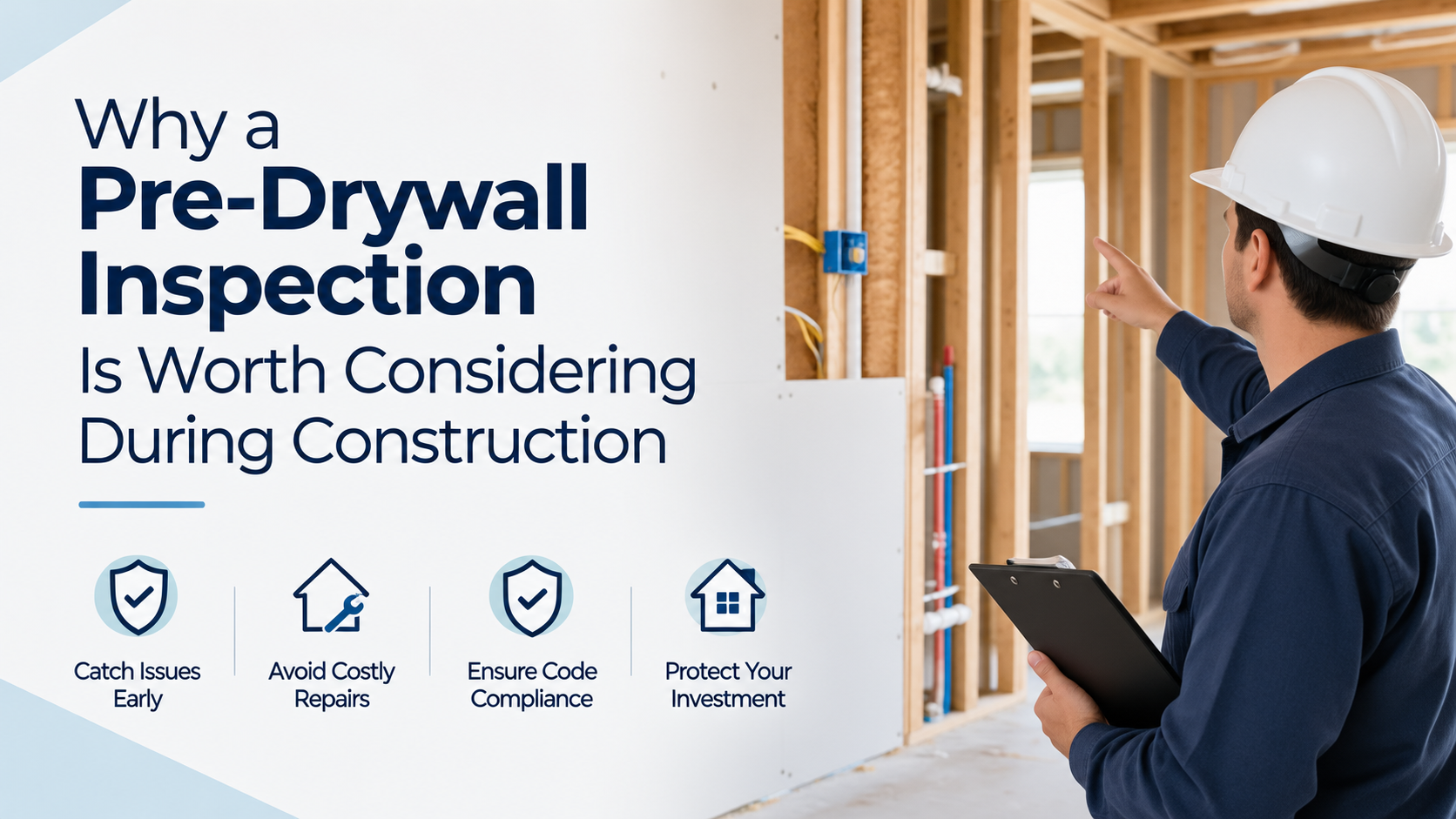
Building a new home is an exciting process, but much of the work that determines a home’s long-term performance happens before the walls are finished. Once drywall, insulation, and other materials cover the framing and mechanical systems, many components become difficult or impossible to see.

A pre drywall inspection provides an opportunity to examine important construction details while they are still accessible. It can give homeowners an additional layer of confidence that the work is progressing as expected before the next major stage of construction begins.
What Is a Pre-Drywall Inspection?
A pre-drywall inspection takes place after the major framing, plumbing, electrical, and other rough-in work has been installed but before drywall is placed over the walls and ceilings.
At this stage, many important components are visible.
The inspector can review accessible areas and document conditions that may deserve correction or further evaluation before they are covered.
The inspection does not replace municipal building inspections or the builder’s own quality-control procedures. Instead, it provides an additional perspective for the homeowner.
Why Timing Matters
Once drywall goes up, it becomes much harder to visually inspect the framing and rough-in systems.
A small issue that is easy to identify during the framing stage may become difficult to locate later. In some situations, correcting a problem after drywall installation can require cutting into finished surfaces.
That can mean additional labor, materials, delays, and frustration.
A pre-drywall inspection gives homeowners an opportunity to identify concerns while the relevant areas remain accessible.
What Does the Inspector Look At?
The exact scope depends on the property and inspection agreement, but several areas are commonly reviewed.
Framing
The framing forms the basic structure of the home. Inspectors may look for visible concerns involving framing members, openings, connections, and other accessible components.
They may also document conditions that appear inconsistent with the intended construction or that warrant review by the builder or an appropriate professional.
Plumbing
At the pre-drywall stage, much of the home’s plumbing is visible before it is enclosed.
Inspectors can look at accessible supply lines, drain lines, fittings, and other components for visible installation concerns or damage.
A plumbing specialist may be recommended if a condition requires technical evaluation beyond the inspection’s scope.
Electrical Work
Electrical wiring is another major component hidden behind finished walls.
An inspection can provide a visual review of accessible wiring, boxes, outlets, and other rough-in components. Inspectors may identify conditions that appear incomplete, damaged, improperly installed, or worthy of further review.
HVAC and Ductwork
Heating and cooling systems also deserve attention before the walls are closed.
Accessible ductwork, equipment installation, penetrations, and other visible components can be reviewed. Identifying problems early can be easier than trying to troubleshoot them after the home has been completed.
Windows and Doors
The installation of windows and exterior doors can affect energy efficiency and water resistance.
Inspectors may look for visible gaps, installation concerns, damaged components, or other conditions that could affect performance.
Water Management Deserves Attention
Moisture is one of the biggest concerns in any home.
During construction, inspectors may look at visible elements associated with water management, including flashing, exterior penetrations, drainage details, and other accessible components.
Small installation problems can sometimes create significant issues once a home is exposed to weather.
Finding a potential concern before the walls are finished gives the builder an opportunity to address it without disturbing completed interior surfaces.
It Can Help Homeowners Understand Their New Home
A pre-drywall inspection is not only about finding defects. It can also help homeowners understand how their home is being constructed.
New construction can involve dozens of trades working on different parts of the same property. A homeowner may not know which components should be visible at each stage.
An independent inspection can provide useful documentation and help homeowners become more familiar with the major systems inside their property.
How It Fits Into the Construction Process
Timing is important.
The inspection should generally take place after the relevant rough-in work has been completed but before insulation and drywall conceal the components.
Homeowners should coordinate with the builder to determine when the property will be ready. Construction schedules can move quickly, so waiting too long may mean important areas are already covered.
It is also useful to understand what the inspection includes before scheduling it.
Choosing an Inspection Provider
When comparing home inspections services in Chicago , homeowners should consider experience, inspection scope, reporting practices, availability, and familiarity with new construction.
Ask what the inspection covers and whether the inspector has experience with homes at the pre-drywall stage.
A clear report is also important. Homeowners should be able to understand what was observed, where it was located, and whether further evaluation is recommended.
What Happens After the Inspection?
The inspection report can be shared with the builder or project representative when appropriate.
Not every observation represents a major defect. Some findings may simply require clarification or correction, while others could warrant further investigation.
The builder can then review the findings and determine what action is appropriate.
The goal is to identify concerns early enough that they can be addressed efficiently.
Is a Pre-Drywall Inspection Worth It?
For many homeowners, the biggest advantage is visibility.
Once walls are finished, homeowners generally have to rely on access panels, documentation, and future troubleshooting to understand what is behind them. A pre-drywall inspection provides an opportunity to look at many of those components while they are still exposed.
It is not a guarantee that a home will be completely free of construction defects, nor does it replace required inspections. However, it can be a useful additional step in the new-home building process.
For homeowners investing heavily in a new property, spending time reviewing the construction before the walls are closed can be a sensible way to protect that investment and address potential concerns before they become harder and more expensive to fix.